
ConstructVue Academy · Lesson 9
Managing a construction portfolio: structure, monitoring and review
Running more than one project at a time — consistent structure so projects stay comparable, monitoring that surfaces exposure early, and an executive review cadence built on the same records the teams maintain.
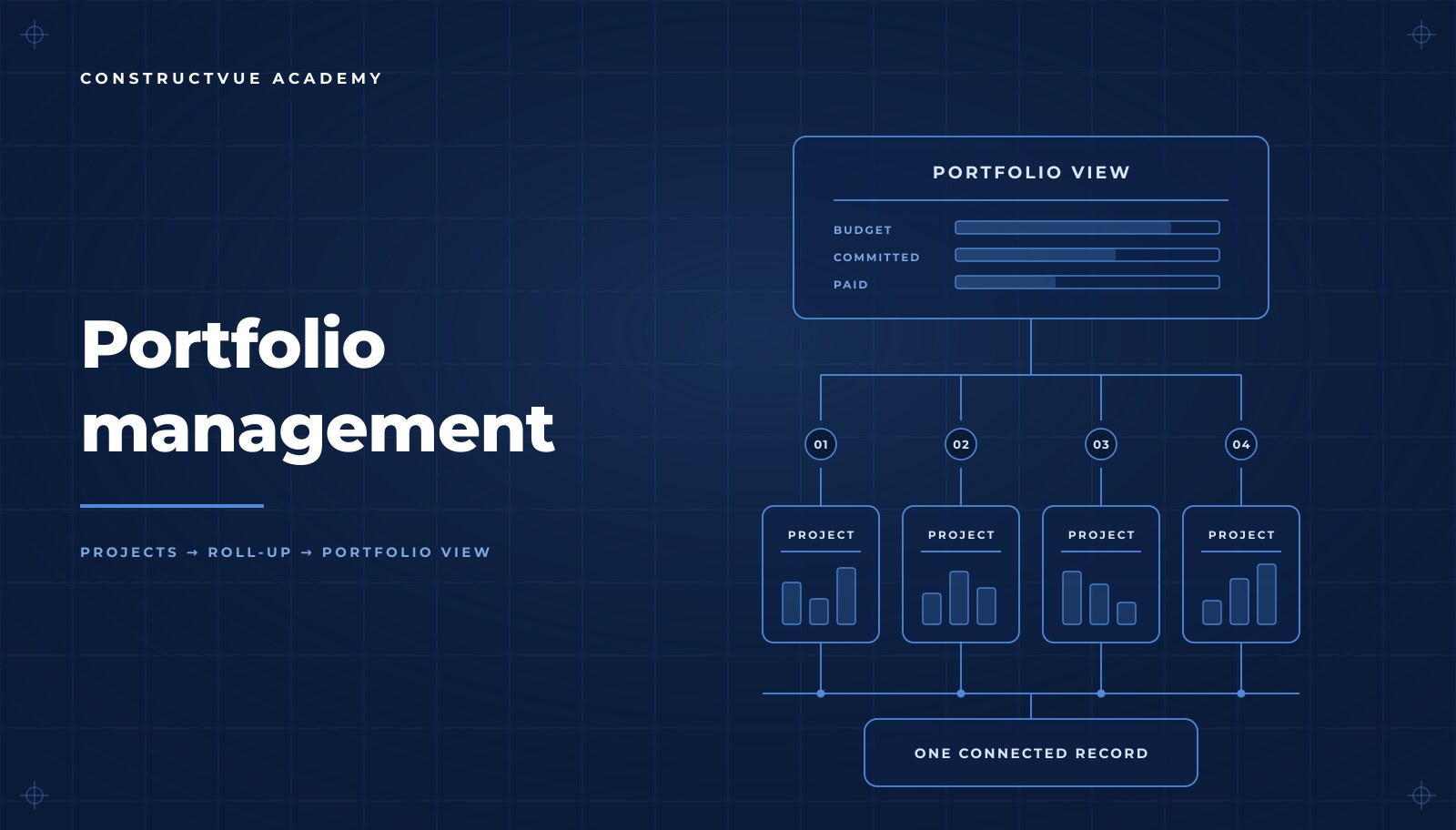
A single project can be managed by attention. A portfolio cannot. Once a company is running five or fifteen jobs at once, the constraint is no longer effort — it is whether the projects are structured consistently enough to be read together.
Portfolio management is therefore mostly a structural discipline. The reporting layer is easy once every project counts the same things the same way; it is impossible when they do not.
Learning objectives
- Standardize project structure so projects stay comparable as the book of work grows.
- Read portfolio budget, cash remaining and exposure counts as the opening view.
- Monitor performance by movement across periods rather than by single-period position.
- Rank attention by exposure, not by activity or by who asked most recently.
- Run an executive review cadence that reads from the live record.
- Escalate from a portfolio row into the project record in one step.
Portfolio structure
Every project in the portfolio should be created the same way: the same naming and numbering convention, the same work breakdown pattern, the same budget structure and the same definitions for committed and paid. This is set at project creation, which is why project setup is the highest-leverage hour in the portfolio.
Standards belong to the organization
Conventions held by individuals last as long as those individuals. Conventions held by the organization — templates, roles, workflow standards — survive turnover, which is the only test that matters over a multi-year book of work.
Performance monitoring
The portfolio view opens with the totals: how many projects, how many active, the portfolio budget and the cash remaining, upcoming inspections and draws, and the count of projects behind schedule or over budget. Then each project reports status, budget, committed, paid and percent paid on one line.
- Percent paid far ahead of progress is a cash exposure worth a conversation this week.
- A large budget with no commitments is procurement risk, not savings.
- Behind-schedule counts concentrate attention where the calendar is already lost.
- Upcoming draws and inspections are the near-term operational load across the whole book.
Executive review
A portfolio review should run from the live record with a fixed agenda: exposure first, then movement since the last review, then decisions required. Open at least one project record during the meeting — the habit keeps the underlying discipline honest, and it is how you learn whether the numbers on the summary are maintained or merely displayed.
For the printable package that supports the meeting, see the reporting lesson; for how findings are derived, see executive intelligence.
Frequently asked questions
What is construction portfolio management?
It is managing several active projects as one book of work rather than as a set of unrelated jobs. That requires each project to be structured the same way, so budget, committed cost, paid to date and progress mean the same thing on every job and can be added up or compared without translation.
Why does consistent project structure matter so much?
Because comparability is a structural property, not an analytical one. If one project tracks committed cost at contract execution and another at award, no dashboard can reconcile them. Standard naming, a standard work breakdown and a standard budget structure are what make portfolio reporting possible at all.
What should a portfolio view show?
Total projects and how many are active, portfolio budget and cash remaining, upcoming inspections and draws, and counts of projects behind schedule or over budget. Then a project table with status, budget, committed, paid and percent paid, so exposure and progress read side by side.
How often should a portfolio be reviewed?
Weekly for exposure, monthly for financial position. The cadence matters less than its stability: a review that happens on a schedule builds a trend line, while a review that happens when something goes wrong only ever sees the exception.
What is the most common portfolio management failure?
Reviewing the loudest project instead of the most exposed one. Activity attracts attention; exposure deserves it. The portfolio view exists to put those two things back in the right order.
Related Academy lessons
For how ConstructVue supports a portfolio in practice, see portfolio management for capital programs, or return to the Academy hub for the full series.
Lesson chapters
- 0:04Welcome
- 0:24Portfolio structure
- 0:59Performance monitoring
- 1:29Executive review
- 1:58Next steps